The link between employee value and workplace wellbeing

Employee wellbeing is frequently managed as a standalone stream of activity. We often see that culture, benefits and engagement are looked at separately rather than holistically.  

Employees do not experience their working lives in these silos. 

When someone feels trusted, recognised and supported, their sense of psychological safety increases. When they feel overlooked or undervalued, stress rises — even if formal wellbeing support is available. 

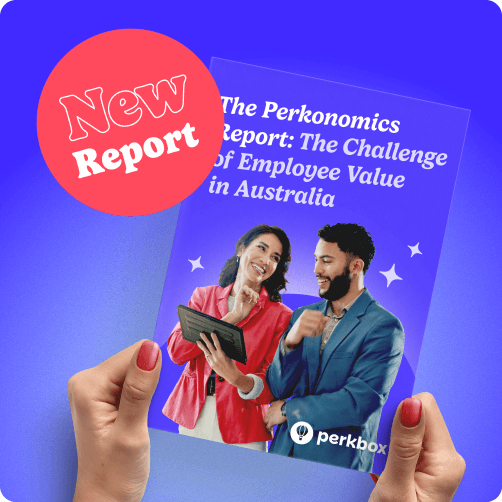
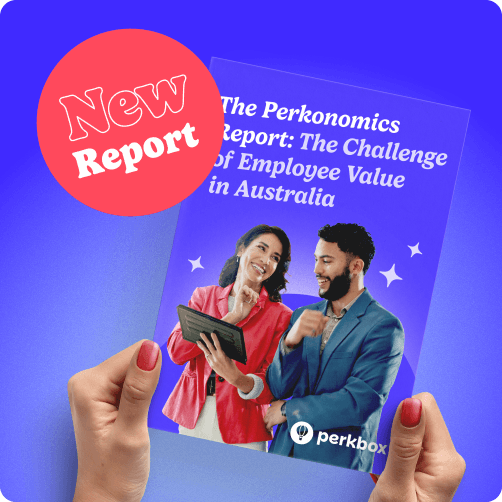
The Perkonomics data makes this connection clear. A majority of employees directly associate feeling undervalued with poorer mental wellbeing. That means employee value in the workplace is not simply a cultural aspiration, it’s a practical stress management lever. 

For leaders focused on workplace wellbeing in Australia, this reframes the conversation. Wellbeing is not only about access to support. It is about the everyday experience of work. 

people meditating in office

How feeling undervalued increases stress at work

Burnout is visible. It often takes form in extended leave, exhaustion and formal complaints. However, the early indicators of stress at work are far more subtle. 

What you might see is engagement softening, discretionary effort starts to narrow and collaboration becomes transactional rather than proactive. Presenteeism also increases as employees continue to show up while mentally withdrawing. 

When people feel undervalued, stress often accumulates gradually. It may not appear immediately in absence data, but it shapes energy, confidence and resilience over time. 

Safe Work Australia continues to report that work-related psychological injury claims are rising, and these claims typically result in longer periods away from work than physical injuries. When considering mental health at work, the implications for productivity and cost are significant. 

If undervaluation contributes to chronic stress, organisations that overlook this connection are managing symptoms rather than addressing root causes. 

person looking tired at desk

Why employee wellbeing directly impacts retention outcomes

Workplace wellbeing and employee retention are not parallel strategies – they are interdependent. 

When employees experience feeling undervalued it can lead to sustained stress, this is when their attachment and loyalty to the organisation weakens. The Perkonomics findings show that employees who feel undervalued are significantly more likely to consider leaving. Emotional strain influences mobility and can reshape how employees assess their future within an organisation. 

Over time, this creates a reinforcing cycle: undervaluation increases stress, stress reduces engagement, reduced engagement increases the likelihood of employee voluntary turnover. By the time resignation rates rise, the underlying wellbeing pressure has often been building for months. 

Organisations that approach employee wellbeing purely as a reactive service will always be responding late. A more strategic approach recognises that strengthening employee value is a preventative retention strategy. 

man thinking and looking at screen

The structural drivers of workplace stress

The impact of wellbeing on undervalued individuals is not evenly distributed. Nearly a third of female employees strongly agree that feeling undervalued negatively affects their mental health and self-esteem, compared to 24% of male employees. This suggests that while undervaluation affects everyone, its emotional intensity differs. 

Age patterns introduce further complexity. Employees aged 50 and above are slightly more likely to connect being undervalued with wellbeing impact than younger cohorts. 

These differences matter for organisations focused on inclusion, equity and long-term retention. If specific groups feel undervalued to the point of being scrutinised, wellbeing risk will fluctuate across the workforce. 

The structural design of work also plays a role. As explored in our discussion on the deskless workforce divide, non-office employees report lower overall value scores. If perceived value correlates with stress, frontline wellbeing exposure may be higher than headline engagement metrics suggest. 

Workplace wellbeing, therefore, cannot be location-dependent. When employee recognition, communication, and access to benefits vary by environment, emotional strain may vary as well. 

hotel cleaner

A more strategic approach to workplace wellbeing strategy in Australia

In 2026, strengthening employee wellbeing requires moving beyond reactive support mechanisms. 

Traditional approaches focus on in-the-moment services such as counselling access or crisis intervention. While these are essential components of responsible care, they run downstream. If 61% of employees connect undervaluation to increased stress and poorer mental health, then leaders must focus upstream. 

That includes: 

  • Embedding employee recognition into everyday routines rather than relying on occasional awards 
  • Reinforcing trust and autonomy through consistent leadership behaviour 
  • Ensuring benefits and financial wellbeing support are visible and easy to access 
  • Designing inclusive employee experiences across office, hybrid and frontline environments 
  • Wellbeing improves when employees feel seen and supported consistently, not just when they reach a breaking point. 

Organisations that treat feeling valued as a measurable leading indicator – alongside engagement and turnover – gain earlier visibility into emerging stress patterns. Early insight creates space for prevention rather than correction. 

people recognising each other

A leadership question for 2026

If the majority of your employees associate feeling undervalued with increased stress, what does that mean for your current workplace wellbeing strategy? Is wellbeing positioned primarily as a program or is it treated as an outcome of how work is structured, recognised and communicated? 

In a labour market defined by mobility and rising expectations, the organisations that strengthen employee retention will be those that understand this connection clearly. Workplace wellbeing is not simply about support services, it’s about whether employees experience feeling valued every day. 

Other resources you might like...

Blog

Employee retention in 2026: Why pay alone won’t keep your people

Blog

Deskless workforce retention in Australia: Why frontline risk is higher than you think

Blog

The confidence gap: Do you really know how valued your employees feel?

Back to top