Here's the thing about Cycle to Work: it doesn't just tick one box, it ticks several.
It strengthens your Employee Value Proposition: In a competitive hiring market, the quality and breadth of your benefits package matters. Cycle to Work signals that your organisation invests in its people's health, finances and sustainability — all things today's employees care about.
It supports your ESG commitments: Active travel reduces carbon emissions and cuts congestion. If your business has sustainability targets, Cycle to Work is a tangible and reportable initiative that directly supports your goals.
It helps reduce sickness and absence: Research shows that bicycle commuters take on average 4.5 fewer sick days than non-cycling commuters and are 18% less likely to be absent longer than 10 days due to health problems. That's a meaningful difference.
It supports with cost of living: Cycling to work is significantly cheaper than driving or using public transport with average commuting now £2,228 per year.
It’s inclusive: Perkbox’s Cycle to Work scheme offers more than just standard road bikes – with adaptive bikes, e-bikes and a whole host of safety equipment, there’s something to suit a range of abilities.
And the cost of not offering it? Your competitors likely already do. It’s a popular benefit, so employers who don't offer Cycle to Work aren’t just missing out on their own NI savings, they’re handing a recruitment advantage to others.
What do employees actually get?
Through the scheme, employees can hire a bike and safety equipment, like helmets, lights, locks and hi-vis gear, for use on their qualifying commute journeys.
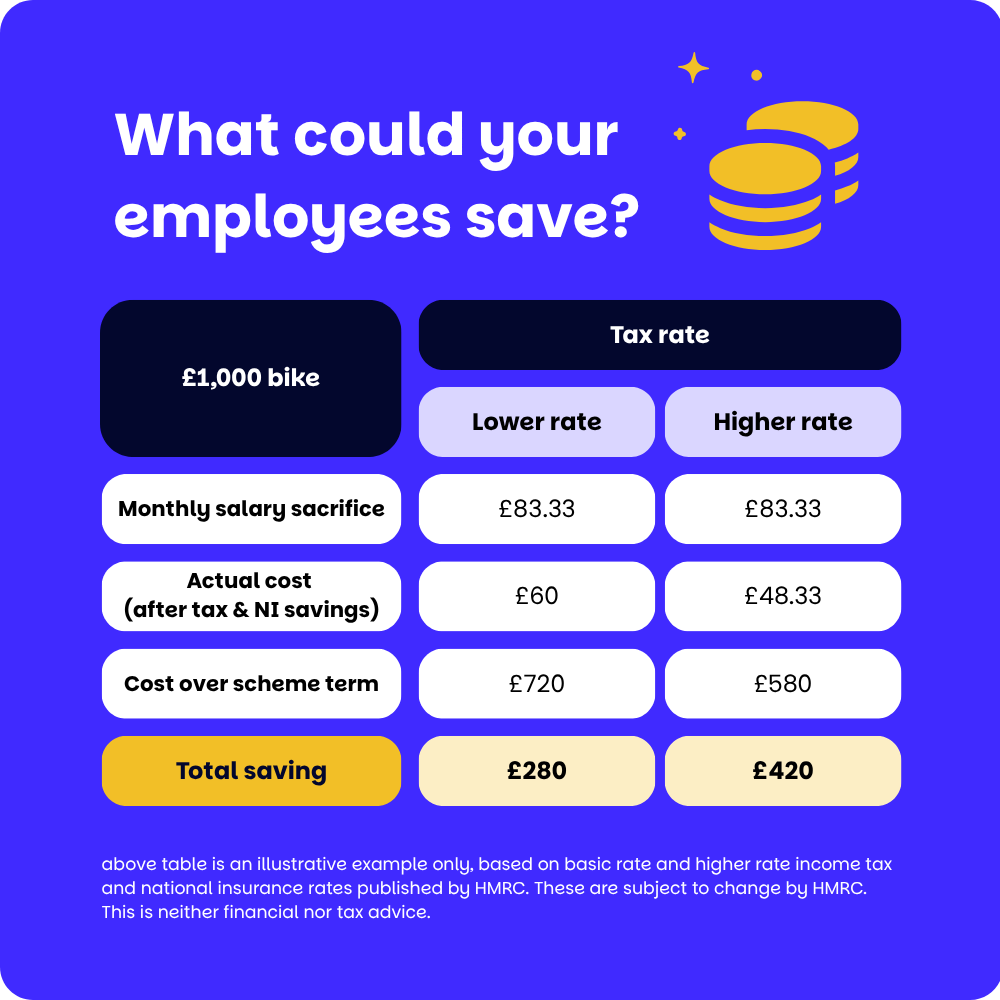
A hire agreement is set up through the scheme, with gross salary reductions made over the agreement period. At the end, employees have flexibility to choose what happens next and the savings they've made along the way make the whole thing far more manageable than buying outright.



Share